
The Evolution of Puzzle Design: Why Portal 2 Remains a Benchmark for Game Designers
Ever wondered why the test chambers in Portal 2 still feel fresh after more than a decade? The answer lies in a meticulously crafted portal 2 puzzle design philosophy that blends spatial reasoning, player psychology, and elegant mechanics. In this deep‑dive we’ll unpack the design frameworks that make the game a timeless case study, extract actionable lessons for indie developers, and compare its approach to other modern puzzle titles.
Quick answer
Portal 2 excels because it treats each test chamber as a micro‑lesson, gradually expanding the player’s toolset while keeping the learning curve smooth. Its design hinges on three pillars:
- Clear mechanic introduction – new elements appear one at a time, with a safe “sandbox” chamber to experiment.
- Layered complexity – later chambers combine earlier mechanics in novel ways, reinforcing memory without feeling repetitive.
- Feedback‑rich environments – visual, auditory, and narrative cues tell players instantly whether they’re on the right track.
Together, these pillars create a puzzle design principles blueprint that modern developers can adapt to any genre.
portal 2 puzzle design: A Deep Design Framework Analysis
1. The “Teach‑Play‑Test” Loop
Portal 2’s level design follows a repeatable loop that we’ll call Teach‑Play‑Test:
| Phase | What Happens | Design Goal |
|---|---|---|
| Teach | A new mechanic (e.g., the Excursion Funnel) is introduced in a low‑stakes chamber. | Instantly convey purpose through visual cues and minimal obstacles. |
| Play | Players experiment, receiving immediate feedback from the environment (sound, particle effects). | Reinforce learning, encourage curiosity, and build confidence. |
| Test | The mechanic is combined with earlier tools in a more demanding puzzle. | Assess mastery, increase tension, and reward clever solutions. |
This loop is repeated 30+ times across the campaign, creating a player learning curve that feels natural rather than forced.
2. Spatial Reasoning Puzzles as Narrative Devices
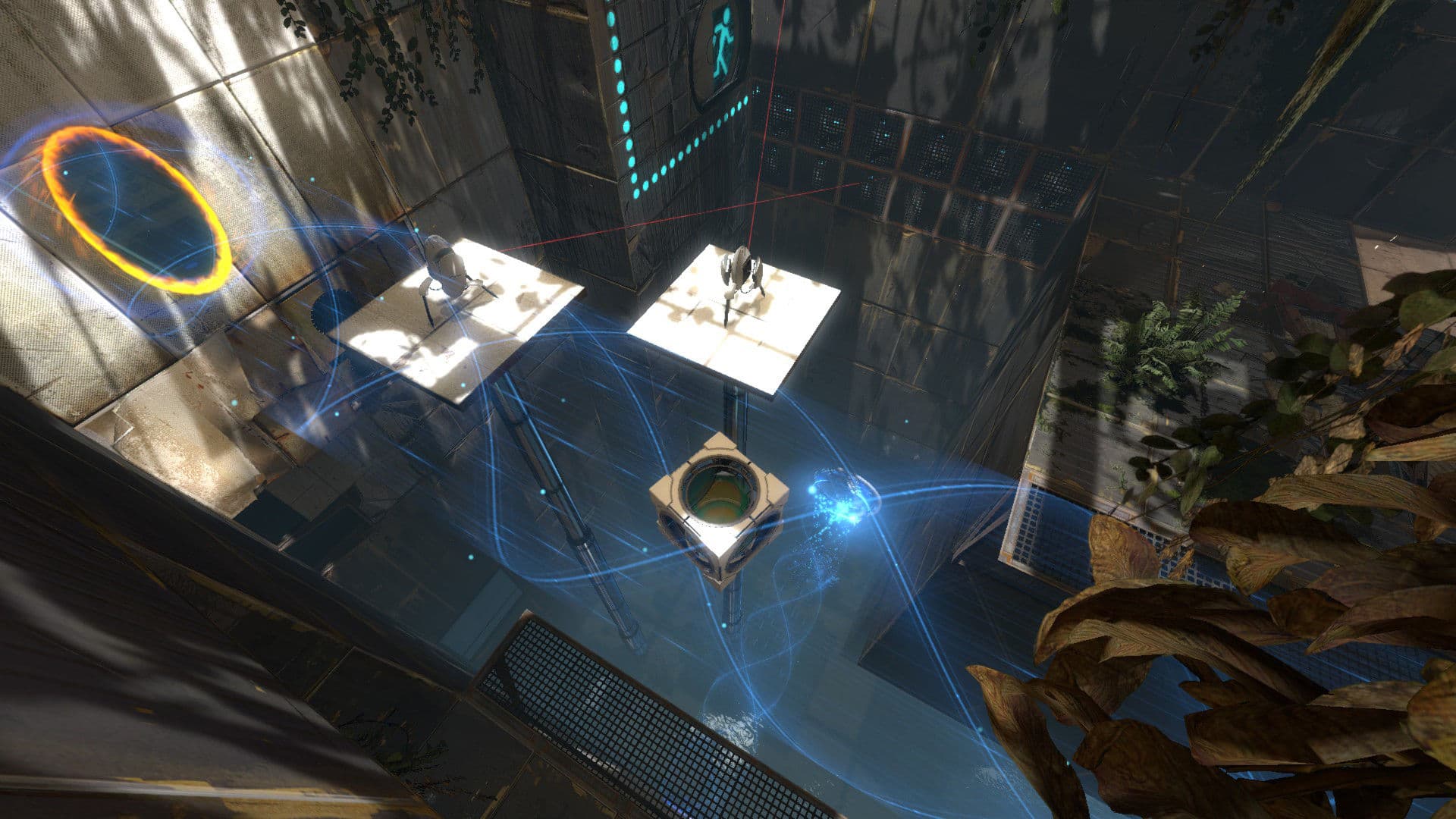
Portal 2 treats spatial reasoning puzzles not just as obstacles but as storytelling tools. Each test chamber is a “scene” that reveals a piece of the plot or character personality. For example, the “Flinging the Cube” chamber doubles as a subtle joke about the game’s physics engine, while the “Repulsion Gel” rooms echo the growing tension between Wheatley and GLaDOS.
Design takeaway: Align puzzle mechanics with narrative beats to give each puzzle emotional weight.
3. Modular Level Architecture
The game’s design frameworks rely on a modular approach: every chamber is built from a library of reusable assets (portals, gels, cubes, lasers). By swapping modules, designers can craft fresh challenges without reinventing the wheel. This modularity also aids rapid iteration and QA testing—a lesson indie teams can apply by building a puzzle game design case study library of reusable components.
Game Design Lessons from Portal 2
Actionable Tips for Developers
- Tip: Start every new mechanic with a “sandbox” chamber. Let players experiment without penalty; this reduces frustration and accelerates skill acquisition.
- Tip: Use visual language consistently. Portal 2’s orange‑blue portal colors are instantly recognizable; pick a visual motif for each mechanic in your own game.
- Tip: Layer difficulty, don’t multiply it. Add one new element per chamber, then combine it with earlier ones—this keeps the cognitive load manageable.
4 Pillars of Puzzle Design Principles
- Clarity – Clear affordances (glowing edges, color coding) tell players what can be interacted with.
- Progressive Complexity – Incrementally increase the number of interacting systems.
- Feedback Loops – Immediate, unambiguous feedback (sound cues, particle effects) confirms correct actions.
- Narrative Integration – Tie puzzles to story beats to boost immersion.
Applying these pillars yields a portal 2 mechanics‑centric design that feels both intuitive and rewarding.
Comparative Case Study: Portal 2 vs. Other Modern Puzzle Games
| Game | Core Mechanic | Teaching Method | Difficulty Balance | Notable Strength |
|---|---|---|---|---|
| Portal 2 | Portal gun + gels | Sandbox → layered test chambers | Smooth curve via Teach‑Play‑Test | Narrative‑driven puzzles |
| The Witness | Line‑drawing on panels | Open world exploration, no explicit tutorials | Steep; relies on player discovery | Environmental storytelling |
| Braid | Time manipulation | Early levels act as tutorials, then abstract puzzles | Abrupt spikes in later chapters | Time‑based mechanics |
| The Talos Principle | Logic & robot control | Gradual introduction, but less explicit feedback | Moderate; philosophical narrative adds depth | Philosophical context |
Key Insight: While The Witness trusts players to discover rules, Portal 2 explicitly teaches them, resulting in a lower player learning curve and broader appeal. Indie developers can blend these approaches—offer optional “explorer” chambers for curious players while maintaining a core teaching loop for newcomers.
How Portal 2 Teaches Players New Mechanics
1. Visual Signposting
- Color coding: Orange portals vs. blue portals.
- Texture cues: Gel surfaces have distinct patterns that indicate their effect.
2. Auditory Feedback
- Portal activation sound: Confirms a successful placement.
- Failure buzz: Instantly tells the player a move is illegal, prompting re‑evaluation.
3. Narrative Guidance
Characters (Chell, Wheatley, GLaDOS) comment on the player’s actions, subtly reinforcing the lesson (“You’re really good at this, you know!”). This game design theory leverages social proof to boost confidence.
4. Safe Experimentation Zones
Early chambers lack time limits or lethal hazards, allowing players to test the limits of a new mechanic without penalty.
Balancing Difficulty and Player Learning
Portal 2’s difficulty curve is a masterclass in design frameworks that keep players in the “flow” state.
| Difficulty Element | Implementation | Player Impact |
|---|---|---|
| Time Limits | Introduced only after players master core mechanics. | Adds tension without overwhelming novices. |
| Enemy AI (Turrets, AT‑Blocks) | Appear after portal basics are solid. | Forces strategic use of portals, reinforcing earlier lessons. |
| Multi‑Step Solutions | Combine 3‑4 mechanics in later chambers. | Rewards mastery, showcases creative problem‑solving. |
By delaying high‑stakes elements until the player has a robust toolbox, Portal 2 avoids the “spike‑and‑drop” frustration common in many puzzle games.
Practical Design Blueprint: Building Your Own Portal‑Inspired Puzzle
- Define a Core Tool – e.g., a “gravity switch” that flips gravity direction.
- Create a Sandbox Chamber – No hazards, just the tool and a simple objective (reach the exit).
- Add a Second Tool – Introduce a “magnetic platform” in a new chamber, teaching it with a safe demo.
- Combine Tools – Design a test chamber that requires flipping gravity while using the magnetic platform to cross a gap.
- Layer Narrative – Add a short voice line or visual story element that explains why the player needs to combine these tools.
Follow the Teach‑Play‑Test loop, and you’ll have a mini‑case study that mirrors the portal 2 puzzle mechanics analysis used by Valve.
Why Portal 2 Remains a Benchmark in Puzzle Design
- Holistic Integration: Mechanics, story, and aesthetics are inseparable.
- Iterative Learning: Each chamber builds on the last, reinforcing memory.
- Scalable Complexity: The modular asset system lets designers expand the game without reinventing core systems.
- Player‑Centric Feedback: Immediate visual and auditory cues keep frustration low and satisfaction high.
These factors make Portal 2 a go‑to reference for game design lessons portal 2 and a template for any developer seeking to craft compelling puzzle experiences.
FAQ
What design principles does Portal 2 use?
Portal 2 relies on clarity, progressive complexity, instant feedback, and narrative integration—core puzzle design principles that keep players engaged and learning.
How does Portal 2 teach players new mechanics?
Through a Teach‑Play‑Test loop: sandbox chambers introduce tools, feedback‑rich environments reinforce usage, and layered test chambers combine mechanics to assess mastery.
Why is Portal 2 considered a benchmark in puzzle design?
Its modular architecture, smooth difficulty curve, and seamless blend of story with gameplay create a timeless template that other titles still strive to emulate.
What can indie developers learn from Portal 2?
Start with clear tutorials, use visual/audio cues, design modular puzzles, and gradually increase complexity while tying challenges to narrative beats.
How are test chambers structured in Portal 2?
Each chamber follows a three‑stage structure: Introduce a mechanic, Explore it in a low‑risk setting, then Challenge the player by combining it with previously learned tools.