
Portal 2 stands as one of the most meticulously crafted puzzle games in gaming history, where every mechanic, environmental detail, and narrative beat serves a purpose in creating an experience that feels both intellectually stimulating and emotionally resonant. Released in 2011, Valve's masterpiece continues to be studied by game designers for its elegant integration of complex problem-solving with compelling storytelling. What makes Portal 2's puzzle design particularly remarkable is how it manages to balance accessibility with depth, ensuring players of all skill levels can progress while still providing challenges that satisfy even the most dedicated puzzle enthusiasts.
Quick Answer
Portal 2's puzzle design excellence stems from its meticulous progression system that introduces mechanics gradually, its brilliant use of environmental storytelling to guide players without explicit instructions, and its seamless integration of narrative elements with gameplay mechanics. The game teaches players through carefully designed challenges that build upon previous knowledge, uses visual cues and spatial relationships to communicate puzzle solutions, and creates meaningful context for each puzzle through its rich narrative and character development. This holistic approach creates a puzzle experience that feels both intuitive and deeply satisfying, setting a benchmark for future titles in the genre.
The Evolution of Portal Mechanics
From Humble Beginnings to Complex Systems
Portal began as a modest student project called "Narbacular Drop" that impressed Valve enough to become a full game included in The Orange Box. The original Portal introduced players to the core mechanic of creating portals to traverse space in non-Euclidean ways. Portal 2 expanded upon this foundation by introducing new mechanics that exponentially increased the complexity and creativity of potential puzzles.
The sequel introduced several game-changing elements:
- The Propulsion Gel for increased speed
- The Conversion Gel for creating portal surfaces
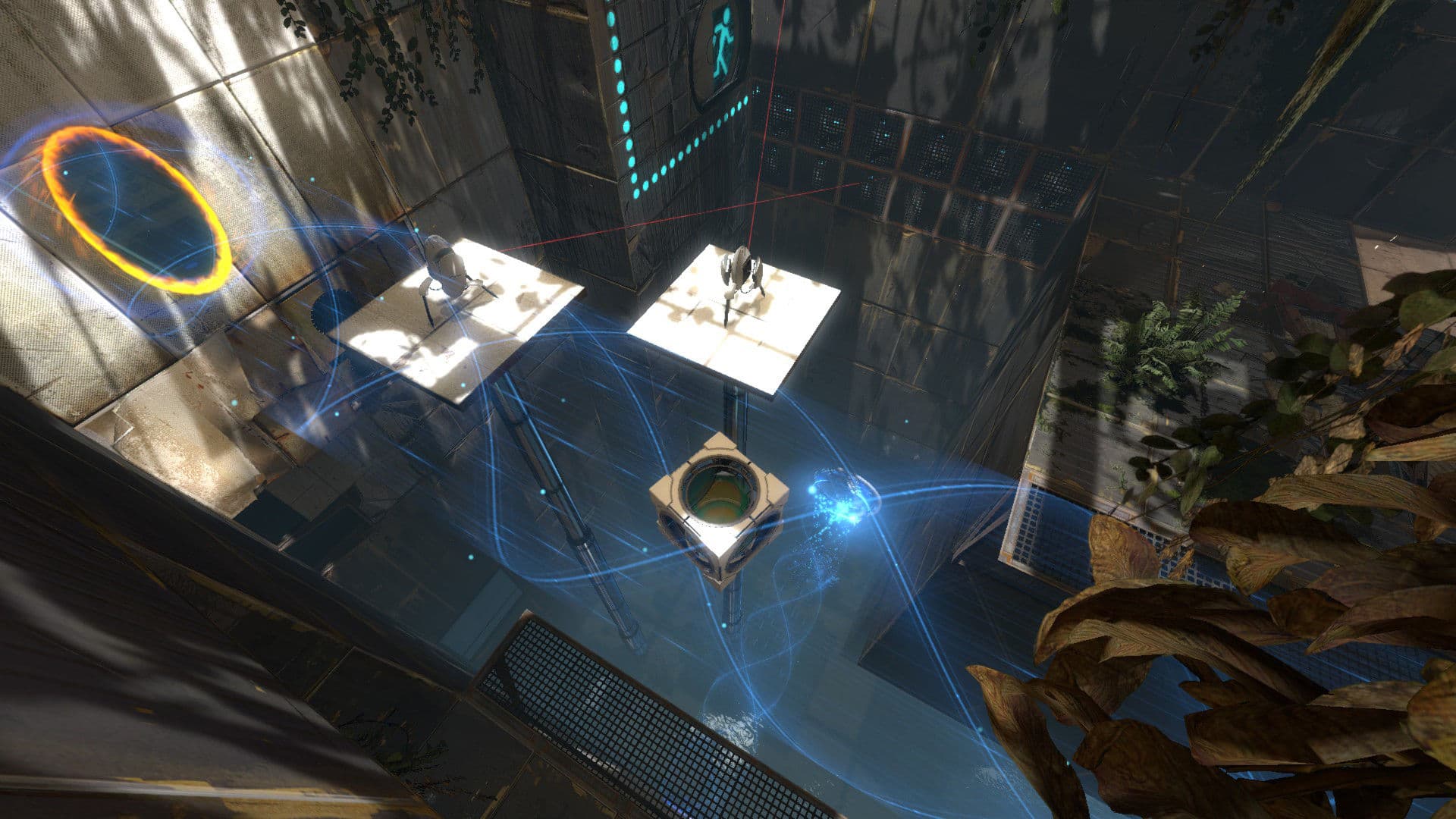
- The Excursion Funnel for moving through tight spaces
- The Hard Light Bridge for creating temporary platforms
- The Thermal Discouragement Beam (laser) for activating mechanisms
These new elements didn't simply add more tools to the player's arsenal—they created entirely new puzzle dimensions that built upon the foundation established in the original game.
Layered Mechanics and Synergy
What elevates Portal 2's puzzle design is how these mechanics interact with each other. The game doesn't just teach players isolated mechanics; it teaches them how these mechanics can combine in unexpected ways. For example, using propulsion gel to quickly traverse a surface before placing a portal creates timing-based challenges that wouldn't be possible with either element alone.
This layered approach creates exponential growth in puzzle complexity. By the game's later stages, players are simultaneously managing multiple mechanics, considering spatial relationships, and planning multi-step solutions—all while maintaining the game's signature sense of flow and discovery.
Design Philosophy of Incremental Complexity
Portal 2 follows a strict principle of introducing one new concept at a time and allowing players to master it before combining it with previously learned mechanics. This approach prevents players from feeling overwhelmed while ensuring each new element feels meaningful and impactful. The game's designers clearly understood that puzzle games thrive on clarity of rules and the satisfaction of mastering those rules through experimentation.
Puzzle Progression and Learning Curve
The Art of Teaching Through Play
Portal 2 is perhaps the ultimate example of "learning through doing." The game never explicitly explains mechanics through text or tutorials; instead, it teaches players through carefully designed challenges that guide them toward understanding organically. Each test chamber functions as a micro-lesson that builds upon previous knowledge.
For instance, early chambers introduce the basic portal mechanic by placing obvious portal surfaces and objectives. As players progress, the game gradually removes these crutches, expecting players to apply their growing understanding to increasingly complex scenarios. This scaffolding approach creates a natural learning curve that feels both challenging and achievable.
Cognitive Load Management
One of Portal 2's greatest strengths is its management of cognitive load—the amount of information a player needs to process at any given time. The game expertly balances introducing new concepts while reinforcing previous ones, ensuring players never feel lost or overwhelmed.
The designers achieve this through:
- Clear visual distinction between different mechanics
- Logical grouping of related test chambers
- Gradual increase in complexity rather than sudden spikes
- Consistent environmental language that players learn to interpret
This careful management of cognitive load makes Portal 2 accessible to a broad audience while still providing depth for players who want to explore optimal solutions.
The Satisfaction of Mastery
Portal 2 excels at creating moments of insight where players suddenly understand a mechanic or solution path. These "aha!" moments are carefully designed to occur after players have experimented with the game's mechanics, creating a sense of genuine accomplishment rather than simply following instructions.
The game's optional challenges, such as achieving "Par" timing or collecting every test element, provide additional layers of mastery for players who want to push their understanding further. These optional challenges don't feel tacked on; they emerge naturally from the core mechanics and reward players for thinking creatively.
Visual Design and Environmental Storytelling
Environmental Communication
Portal 2 demonstrates how visual design can communicate information more effectively than text or tutorials. The game's environments are meticulously crafted to provide subtle hints about solutions without explicitly stating them. For example, the placement of portal surfaces, the arrangement of obstacles, and even the lighting all serve as potential clues for observant players.
This environmental communication creates a dialogue between the game and the player, where observant players are rewarded with insights into puzzle solutions. The game never punishes players for missing these cues—solutions are always reachable through experimentation—but observant players can progress more efficiently and feel a sense of satisfaction for their attention to detail.
Color Psychology and Spatial Relationships
The game's use of color is particularly noteworthy in its puzzle design. Different mechanics are associated with distinct colors:
- Blue and orange for standard portals
- White for propulsion gel
- Black for conversion gel
- Blue for excursion funnels
- Cyan for light bridges
This color coding helps players quickly identify and differentiate mechanics, reducing cognitive load. Additionally, the game uses spatial relationships to communicate information—such as placing key elements at different heights to suggest portal placement or using architectural lines to guide players' understanding of space.
The Aperture Science Aesthetic
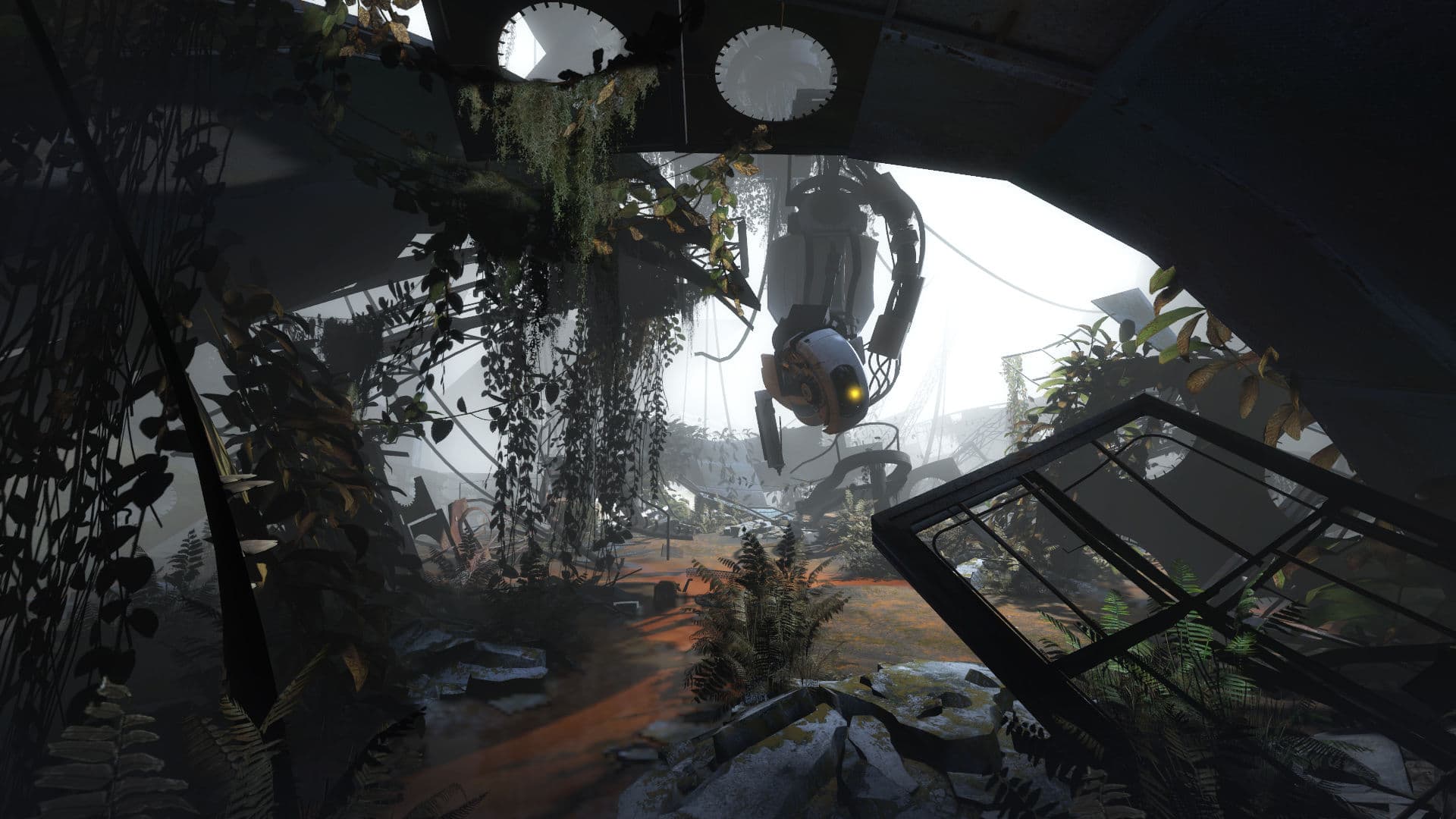
The industrial, sterile aesthetic of Aperture Science isn't just thematic—it serves functional purposes in puzzle design. The clean lines and consistent architecture create a predictable environment where players can develop spatial reasoning skills. The game's visual language is so consistent that players learn to interpret environmental cues as naturally as they would in the real world.
This consistency extends to the game's testing elements. The placement of cameras, laser receivers, and other testing equipment follows logical patterns that players can learn to recognize. Once players understand these patterns, they can apply this knowledge to new challenges, creating a sense of mastery that extends beyond individual puzzles.
Narrative Integration with Gameplay
Story Through Mechanics
Portal 2 achieves something remarkable: its narrative emerges directly from its gameplay mechanics. The portal gun itself isn't just a tool—it represents the scientific curiosity and experimentation that drives both the story and the player's actions. As players navigate increasingly complex test chambers, they're also uncovering the dark history of Aperture Science and the tragic story of its founder, Cave Johnson.
This integration means that every puzzle serves a dual purpose: it challenges the player intellectually while also advancing the narrative. The test chambers aren't just arbitrary challenges; they're part of Aperture Science's deteriorating infrastructure, and their design reflects the company's descent from innovative to desperate.
Character Development Through Gameplay
The game's two main characters, Chell and Wheatley, develop through the gameplay itself. As players master increasingly complex puzzles, they're also witnessing Chell's growing competence and Wheatley's insecurity. The dialogue and character interactions are carefully timed to coincide with gameplay moments, creating a seamless blend of story and action.
For example, Wheatley's dialogue often provides hints or commentary on the puzzles, but his personality comes through in how he delivers these lines—sometimes helpful, sometimes panicking, sometimes sarcastic. This character development through gameplay creates a deeper connection between players and characters than traditional cutscenes or dialogue alone could achieve.
Emotional Resonance Through Challenge
Portal 2's puzzles are designed to create emotional responses beyond intellectual satisfaction. The game's climactic sequences, such as the final battle with GLaDOS and the escape sequences, combine complex puzzles with rising tension and emotional stakes. These moments demonstrate how puzzle design can create genuine emotional engagement when mechanics and narrative work together seamlessly.
The game's ending, in particular, uses puzzle-solving to create a powerful emotional resolution. The final challenges aren't just difficult—they're meaningful, and their solutions provide catharsis that feels earned through the player's journey through the game.
Level Design Principles in Portal 2
Architectural Clarity
One of Portal 2's most impressive achievements is its architectural clarity. Every test chamber is designed with spatial relationships that make sense, allowing players to develop accurate mental models of the environment. This clarity is essential for puzzle-solving, as players need to understand how different spaces connect to plan their solutions.
The game achieves this through:
- Consistent scale and proportions
- Logical connections between spaces
- Clear sight lines that help players orient themselves
- Distinct architectural features that serve as landmarks
This architectural clarity isn't just functional—it also contributes to the game's distinctive aesthetic and sense of place.
Flow and Pacing
Portal 2 demonstrates masterful pacing in its level design. The game alternates between moments of intense concentration and discovery, creating a rhythm that keeps players engaged without overwhelming them. This pacing is achieved through careful variation in puzzle types, environmental changes, and narrative developments.
The game also excels at creating "flow states" where players become fully immersed in the puzzle-solving process. By maintaining a consistent challenge level that matches players' growing skills, the game creates a sense of effortless concentration that is deeply satisfying.
Space Utilization and Verticality
Portal 2 makes brilliant use of vertical space in its level design. The portal mechanic naturally encourages thinking in three dimensions, and the game's environments are designed to take full advantage of this. Test chambers often span multiple floors, with players required to think about vertical relationships as much as horizontal ones.
This verticality isn't just for visual interest—it serves functional purposes in puzzle design. By creating multi-layered environments, the game increases the complexity of spatial reasoning required, leading to more sophisticated puzzles. The game's iconic "elevator" sequences, which transition between different test chambers, also use verticality to create dramatic reveals and maintain player interest.
Physics Puzzles and Innovation
The Portal Physics Engine
At the heart of Portal 2's puzzle design is its sophisticated physics engine, which creates realistic and consistent interactions between objects, portals, and the environment. This physics engine isn't just a technical achievement—it's a fundamental puzzle element that enables creative solutions.
The portal mechanic itself defies conventional physics by creating instantaneous connections between distant points in space. Portal 2 builds upon this foundation by exploring the implications of this mechanic:
- Conservation of momentum through portals
- Time dilation effects when moving at high speeds
- Complex interactions between multiple portals
- Creative use of gravity and orientation
These physics-based interactions create puzzles that feel both logical and magical, satisfying players' intellectual curiosity while providing endless opportunities for creative problem-solving.
Breaking Expectations
Portal 2 excels at breaking player expectations in ways that feel both surprising and logical. The game regularly presents situations where conventional physics-based thinking would lead to incorrect conclusions, requiring players to think in terms of the game's unique portal mechanics.
For example, players must learn that:
- Moving objects maintain their momentum when passing through portals
- Orientation changes when passing through portals at angles
- Portals can be placed on moving surfaces
- Some surfaces can't accept portals, adding constraints to solutions
These "rules" of portal physics are taught through experimentation rather than explicit instruction, creating a sense of discovery as players uncover the game's underlying logic.
Creative Problem-Solving
The true test of Portal 2's puzzle design is how it encourages creative problem-solving. Unlike many puzzle games that have single "correct" solutions, Portal 2 often allows for multiple approaches to challenges. This design philosophy empowers players to experiment and find solutions that feel personal and satisfying.
The game's optional achievements, such as "Lunacy" (completing a chamber without touching the ground), further encourage creative thinking by imposing additional constraints on puzzle-solving. These challenges don't feel like afterthoughts—they emerge naturally from the core mechanics and reward players for thinking outside the box.
Lasting Impact on Game Design
Influence on Puzzle Games
Portal 2's influence on puzzle game design is difficult to overstate. Its approach to teaching mechanics through environmental design, its integration of narrative with gameplay, and its emphasis on creative problem-solving have become benchmarks for the genre. Many subsequent puzzle games have drawn inspiration from Portal 2's design principles, whether consciously or through osmosis.
Games like Quantum Conundrum, The Talos Principle, and even parts of Super Mario Odyssey show Portal 2's influence in their approach to environmental storytelling and mechanics-based puzzles. Even games outside the puzzle genre have adopted elements of Portal 2's design philosophy, particularly in how they integrate tutorial elements with gameplay.
Design Principles for Future Titles
Portal 2 offers several timeless design principles that continue to inform game development:
- Teach through experience rather than instruction
- Create mechanics that interact in meaningful ways
- Use environmental design to communicate information
- Balance accessibility with depth
- Integrate narrative with gameplay mechanics
- Reward observation and experimentation
- Maintain consistent rules while encouraging creative solutions
These principles have proven valuable across genres and platforms, demonstrating the universal applicability of Portal 2's design philosophy.
Why Portal 2 Remains Relevant
Despite being released over a decade ago, Portal 2 remains relevant because its design philosophy addresses fundamental aspects of game design that transcend technological limitations. The game's focus on clarity, consistency, and player empowerment ensures that it continues to feel fresh and engaging even as graphics technology advances.
Moreover, Portal 2 demonstrates that puzzle games can be both intellectually stimulating and emotionally resonant. By combining sophisticated puzzle design with compelling narrative and character development, the game created a template for how games can engage players on multiple levels simultaneously.
FAQ
What are the core mechanics that define Portal 2's puzzle design?
Portal 2 builds on the original's portal gun, adding new tools like the Wisp, the Orb, and the ability to manipulate time and gravity to create layered puzzles.
How does the game introduce new mechanics without overwhelming players?
Each new mechanic is introduced in a dedicated tutorial level that explains its function through simple, self‑contained puzzles, gradually increasing complexity.
Why is the Wisp considered a timeless puzzle element?
The Wisp allows players to create temporary portals that can be used to reach otherwise inaccessible areas, encouraging creative thinking and spatial reasoning.
How does Portal 2 use physics to enhance puzzle depth?
By combining momentum, gravity, and object manipulation, the game turns basic physics into a puzzle-solving tool, such as using a moving platform to launch a ball into a portal.
What role does narrative play in Portal 2's puzzle design?
The story provides context for each mechanic, making the puzzles feel purposeful and reinforcing the theme of experimentation and discovery.
How can players apply Portal 2's puzzle mechanics to other game designs?
Designers can adopt the modular introduction of mechanics, the use of physics as a gameplay element, and the integration of narrative to create engaging, timeless puzzles.