
Mastering Portal 2's Co-op Test Chambers: A Complete Guide for New Players
Portal 2's cooperative mode revolutionized puzzle gaming by requiring two players to work together using their portal guns to solve increasingly complex test chambers. This comprehensive portal 2 co-op guide will walk you through every aspect of mastering Valve's brilliant cooperative puzzle game, from basic communication strategies to advanced shortcuts that will help you and your partner breeze through even the most challenging chambers. Whether you're playing on Steam or console, these tips and techniques will transform your co-op experience from frustrating to fantastic.
Quick Answer
Portal 2's co-op mode features 13 test chambers that require precise teamwork, communication, and timing. The best approach is to establish clear communication protocols, assign roles based on player strengths, learn chamber-specific shortcuts, and practice together to develop muscle memory. Key tools include the portal gun, light bridges, cubes, and gels that both players must coordinate effectively. With the right strategies, you can complete all chambers efficiently and even discover hidden shortcuts for faster completion times.
Understanding Portal 2 Co-op Fundamentals
Before diving into specific chambers, it's essential to understand the core mechanics of Portal 2's co-op mode. Unlike the single-player campaign, cooperative gameplay requires seamless coordination between two players, each equipped with their own portal gun capable of firing orange and blue portals.
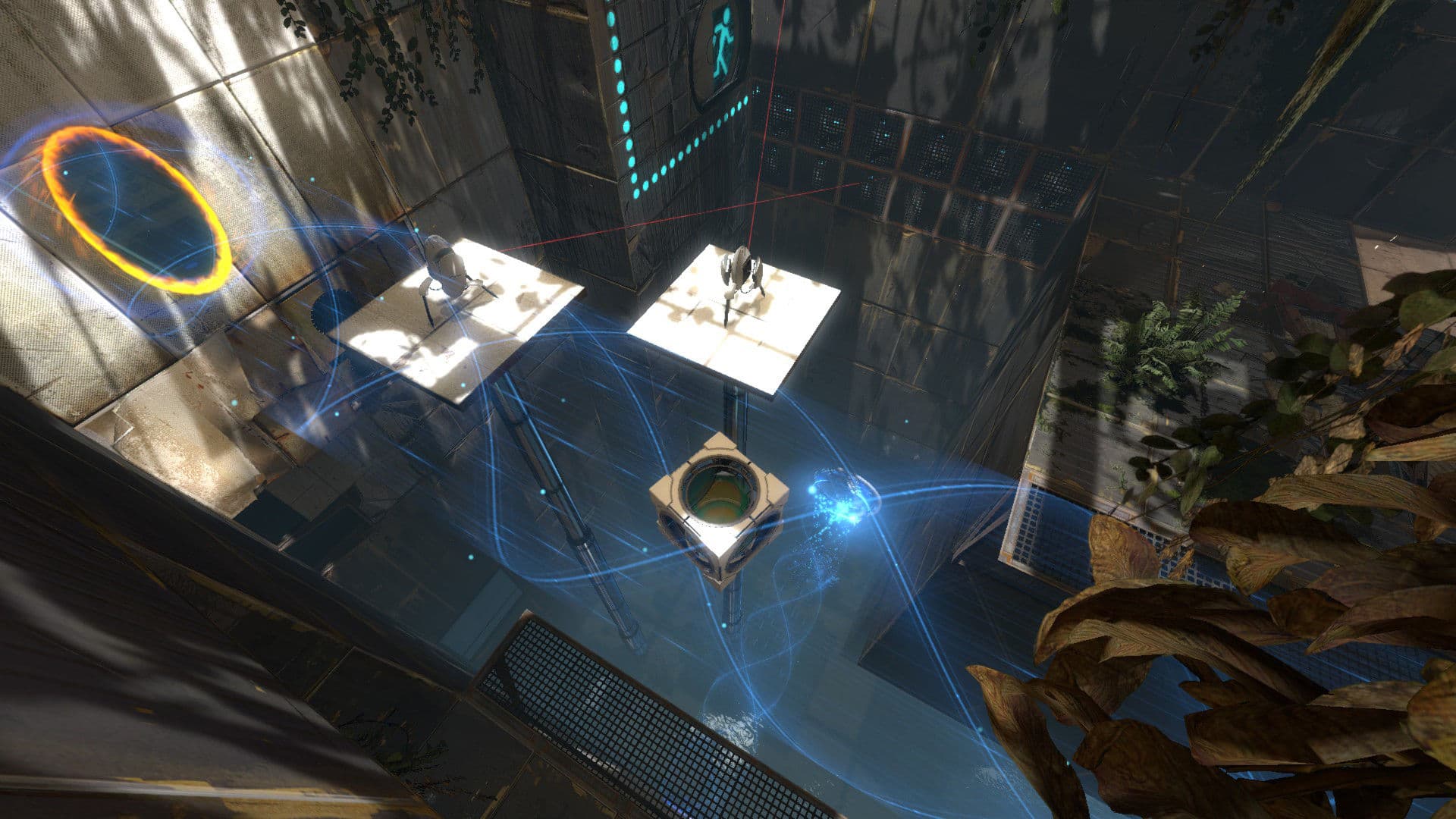
The fundamental difference in Portal 2 multiplayer is that both players must work simultaneously to create pathways, redirect lasers, activate buttons, and solve spatial puzzles. Each player can create two portals on compatible surfaces, allowing for complex routing of energy balls, light bridges, and gels.
Controls and Portal Mechanics
- Player 1 uses the WASD movement scheme with mouse for aiming
- Player 2 uses the same scheme but with different button layouts for portals
- Both players can pick up cubes and place them on buttons
- Gels can be transferred through portals to coat surfaces
- Light bridges can be extended through portals for platforming solutions
Communication Strategies for Portal 2 Co-op
Effective communication is the cornerstone of success in Portal 2's cooperative test chambers. Without clear communication, even the simplest puzzles can become frustrating experiences.
Essential Communication Scripts
Develop a standardized vocabulary for common scenarios:
Portal Placement:
- "Blue high, orange low" - indicates vertical portal placement
- "Blue left, orange right" - indicates horizontal portal placement
- "Cross portals" - instructs the other player to create portals that intersect
Object Movement:
- "Cube to button" - straightforward instruction
- "Catch the cube" - when a cube is falling through a portal
- "Gel on the ramp" - when applying propulsion or conversion gel
Timing Instructions:
- "On three... one, two, THREE!" - for simultaneous actions
- "Wait for my signal" - when precise timing is required
Audio Cue Timing Guide
Pay attention to these audio cues for optimal timing:
- The "portal opening" sound effect indicates when a surface has been successfully marked
- The "energy ball charging" sound precedes laser activation
- The "gel application" sound confirms successful coating
- The "light bridge extending" sound indicates when your partner has deployed a bridge
Team Role Assignments
Consider assigning these roles based on player strengths:
Builder: Focuses on creating the main portal paths and structure solutions
Supporter: Handles secondary portals, cube placement, and timing-based elements
These roles can shift between chambers based on puzzle requirements, but establishing this framework early helps streamline communication.
Chamber-by-Chamber Walkthrough with Shortcuts
Test Chamber 1: Introduction to Portals
The first chamber teaches basic portal mechanics. Player 1 should create a blue portal on the ceiling above the starting platform and an orange portal on the wall opposite the exit. Player 2 should then step through the blue portal to reach the exit.
Hidden Shortcut: After completing the chamber, both players can quickly return to the start by creating portals in the original starting positions, saving approximately 10 seconds over the standard exit route.
Test Chamber 2: Light Bridges
This chamber introduces light bridges. Player 1 should create a blue portal on the ceiling above the laser emitter and an orange portal on the angled platform. Player 2 should then create a blue portal on the floor near the exit button and an orange portal to redirect the laser through the first set of portals.
Hidden Shortcut: Instead of redirecting the laser through both sets of portals, Player 1 can create a direct blue-orange pair across the gap, allowing Player 2 to simply walk across while holding down the bridge button.
Test Chamber 3: Redirecting Lasers
This chamber requires precise laser redirection. Player 1 should create a blue portal on the wall near the laser emitter and an orange portal on the angled panel. Player 2 should then create a blue portal on the opposite wall and an orange portal on the final receptor panel.
Communication Script: "Blue on emitter wall, orange on angled panel. Then blue on far wall, orange on receptor."
Hidden Shortcut: The laser can be redirected with just two portal pairs instead of three if players position portals to create a direct path from emitter to receptor.
Test Chamber 4: Cube Buttons and Light Bridges
This chamber introduces the use of cubes to activate buttons. Player 1 should pick up the cube and place it on the button near the entrance. Player 2 should then create portals to redirect the laser through the light bridge.
Hidden Shortcut: Instead of placing the cube on the visible button, Player 1 can toss the cube through a portal to a hidden button location, sometimes revealing additional content or faster completion paths.
Test Chamber 5: The Faith Plate Challenge
This chamber features faith plates that launch players across gaps. Player 1 should create a blue portal on the ceiling above the first faith plate and an orange portal on the platform near the exit. Player 2 should then create a blue portal on the ceiling above the second faith plate and an orange portal to complete the path.
Long-tail keyword strategy: For the portal 2 co op test chamber 5 shortcut, both players can create portals to form a direct line from the first faith plate to the exit, bypassing the second plate entirely if positioned correctly.
Test Chambers 6-13: Advanced Techniques
As you progress through the remaining chambers, the complexity increases significantly. Here are some advanced techniques to master:
Gel Mechanics:
- Propulsion gel (blue) increases speed
- Conversion gel (orange) allows portal placement on any surface
- Use gels to create shortcuts and reach otherwise inaccessible areas
Portal Funneling:
- Create overlapping portals to funnel objects or players
- Useful for redirecting multiple energy balls simultaneously
Button Sequencing:
- Some chambers require precise timing for button activation
- Practice counting together for simultaneous actions
Team Strategies for Complex Puzzles
When facing particularly challenging chambers, consider these advanced strategies:
The Split-Approach Method
For large chambers, divide the puzzle into sections:
- Player 1 handles the left side of the chamber
- Player 2 handles the right side
- Meet in the middle to combine solutions
The Relay Method
For puzzles requiring precise timing:
- Player 1 sets up the initial portal structure
- Player 2 makes adjustments based on Player 1's setup
- Players communicate back and forth until the solution is complete
The Parallel Method
For chambers with identical puzzle elements on both sides:
- Both players solve their respective sides simultaneously
- Communicate to ensure both sides are completed in sync
Replayability and Competitive Scoring
Portal 2's co-op mode offers significant replayability through its scoring system and hidden content:
Scoring System
- Chambers are rated on completion time and portal usage
- Fewer portals used result in higher scores
- Faster completion times improve ratings
- Perfect scores require optimal routing and minimal portal usage
Speedrunning Strategies
For competitive play:
- Memorize optimal portal routes for each chamber
- Practice muscle memory for common puzzle patterns
- Develop communication shortcuts for faster decision-making
- Learn to anticipate puzzle requirements before entering chambers
Hidden Content Discovery
- Some chambers contain hidden areas accessible only through advanced portal techniques
- Certain test chamber solutions reveal developer commentary or artwork
- Experiment with unconventional portal placement to discover secrets
Common Mistakes and How to Avoid Them
Portal Placement Errors
- Mistake: Creating portals on incompatible surfaces
- Solution: Learn which surfaces accept portals and develop quick identification skills
- Tip: Practice portal placement in the training area until it becomes second nature
Communication Breakdowns
- Mistake: Using vague or inconsistent terminology
- Solution: Establish a standardized vocabulary before starting
- Tip: Assign a "lead" player for each chamber who directs the solution
Timing Issues
- Mistake: Failing to coordinate simultaneous actions
- Solution: Practice counting together and use clear verbal cues
- Tip: Use the "on three" system for critical actions that require perfect timing
Object Mismanagement
- Mistake: Dropping cubes or failing to place them correctly
- Solution: Designate one player as primary object handler
- Tip: Practice cube tossing through portals to improve precision
FAQ
What is the best way to communicate in portal 2 co-op?
The most effective communication system combines standardized terminology with clear, concise callouts. Establish a vocabulary before starting, using terms like "blue up" or "orange down" for portal placement. Designate a "lead" player for each chamber who directs the solution, and practice the "on three" system for simultaneous actions. For best results, use voice chat with push-to-talk to minimize background noise and ensure clear communication.
Are there any hidden shortcuts in portal 2 co-op test chambers?
Yes, nearly every test chamber contains at least one hidden shortcut that can significantly reduce completion time. These shortcuts often involve unconventional portal placement, creative use of gels, or exploiting physics mechanics. For example, in Test Chamber 5, players can bypass the second faith plate entirely by creating direct portals from the first plate to the exit area. Experiment with different approaches and watch speedrun videos to discover these time-saving strategies.
How many test chambers are there in portal 2 co-op?
Portal 2's co-op mode contains 13 test chambers that progressively increase in complexity. These chambers introduce new mechanics and puzzle types, from basic portal redirection to advanced light bridge and gel mechanics. The final chambers incorporate all learned elements into complex multi-stage puzzles that require perfect coordination and communication between players.
Can you replay portal 2 co-op chambers for a better score?
Absolutely! Portal 2's co-op mode includes a scoring system that rates players based on completion time and portal usage. You can replay any chamber to improve your score by finding faster routes or using fewer portals. The game tracks your best scores for each chamber, allowing you to compete against yourself or other players. Perfect scores require optimal routing and minimal portal usage, often involving hidden shortcuts and advanced techniques.
Do you need both players to solve each puzzle?
Yes, Portal 2's cooperative mode is specifically designed to require both players to contribute to solving each puzzle. Some puzzles can be partially solved by one player, but completion always requires input from both. This design philosophy encourages teamwork and communication, making the co-op experience fundamentally different from the single-player campaign. The game's difficulty scales based on the combined efforts of both players, creating a unique cooperative challenge.
What are the most difficult co-op chambers in portal 2?
The most challenging chambers in Portal 2's co-op mode are typically the later ones that incorporate multiple mechanics simultaneously. Test Chamber 10, with its complex light bridge and redirection puzzle, and Test Chamber 13, the final chamber with its multi-stage solution, are consistently rated as the most difficult. These chambers require precise timing, perfect communication, and mastery of all previously learned mechanics to complete efficiently.
How to avoid common mistakes in portal 2 co-op?
To avoid common mistakes in Portal 2 co-op, focus on three key areas: communication, mechanics, and strategy. For communication, establish standardized terminology and practice clear callouts. For mechanics, master portal placement, object handling, and timing through dedicated practice. For strategy, learn to assign roles based on player strengths and develop systematic approaches to different puzzle types. Additionally, watch speedrun videos to learn optimal solutions and common shortcuts that can prevent time-consuming errors.